
Arboricultural Report Self Build UK
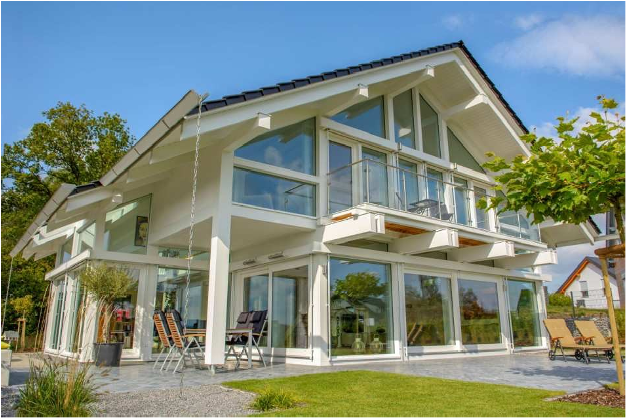
An arboricultural report may be required for self build projects in the UK where trees could be affected by the development or impose constraints on the proposal. An arboricultural report self build uk is crucial for identifying and managing potential legal pitfalls related to trees on your proposed site. Understanding tree-related legal obligations can prevent costly mistakes and delays in the self build process. This guide explains legal challenges, compliance requirements, and practical tips for avoiding common pitfalls when dealing with trees on your self build site.
KD Haus UK can assist with the planning application process, integrating tree constraints and arboricultural requirements into the overall project delivery from the initial architectural design stage.
What is an Arboricultural Report for Self Build Projects?
- Definition: An arboricultural report provides an assessment of trees on or adjacent to a development site where they could be affected by the proposed development. Waverley Borough Council
- Typical contents: A development arboricultural submission may include a tree survey, Tree Constraints Plan, Arboricultural Impact Assessment, Tree Protection Plan, and Arboricultural Method Statement. These are distinct components and are not all necessarily included in every report.
- May be requested as part of UK planning applications where development could affect existing trees or where trees impose constraints.
- Supports sustainable, legally compliant development by guiding the protection and retention of appropriate trees.
Tree Survey Planning Application UK – The Legal Framework
| Scenario | Report Required? | Key Factors |
|---|---|---|
| Trees present but unaffected by development | Often not required | Distance from works, no root zone impact |
| Protected trees (TPO/Conservation Area) | Usually required | Legal protection status, potential constraints |
| Trees within or adjacent to construction zone | Commonly required | Root protection areas, construction impact |
| Significant trees affecting site layout | Usually required | Design constraints, material planning considerations |
- Local planning authorities may request tree information where trees could affect, or be affected by, development. Cheltenham Borough Council
- Tree surveys provide evidence to help planning authorities evaluate the relationship between development and existing trees, supporting planning decisions.
- Requirements vary between planning authorities and applications. Applicants should check local validation requirements and planning policies. Warwickshire Planning
Post and beam timber frame construction, as used by KD Haus UK, provides the open-plan flexibility that allows bespoke configurations to work around existing trees and their root protection zones, unlike rigid panel-based modular systems.
TPO Trees Building UK – Understanding Protected Trees
- Tree Preservation Order (TPO): a legal mechanism protecting individual trees, groups, or woodlands from unauthorised damage or removal.
- TPOs prohibit cutting down, topping, lopping, uprooting, or causing damage without specific local authority consent. Tonbridge and Malling Borough Council
- Protected trees can impose design and construction constraints that must be factored into self build plans from the earliest stages.
Every KD Haus UK home is bespoke to the plot and client brief, allowing the architectural design to integrate tree constraints from the outset rather than attempting to fit a standard design around existing vegetation.
Protected Trees and Development UK – Risks and Responsibilities
- Obligation to avoid unauthorised work on protected trees and to factor tree protection into the design, including Root Protection Areas and construction exclusion zones.
- For certain offences involving protected trees, the maximum fine in the Magistrates’ Court is commonly up to £20,000, with serious cases potentially dealt with in the Crown Court. Tonbridge and Malling Borough Council
- Integrating retained trees into the design can help address planning and construction constraints and reduce the risk of unauthorised work.
Navigating Common Legal Pitfalls in Self Build
- Risks include missing or incomplete arboricultural documentation and failing to identify protected trees early in planning. This can prevent proper assessment of tree constraints. Cherwell Planning
- Submitting inadequate reports or neglecting tree protection may lead to planning refusal or enforcement action, depending on the circumstances and authority’s powers.
- Early engagement of qualified arboriculturists and planning professionals helps identify tree constraints before the design is fixed.
KD Haus UK operates as a single entity from architecture through handover, with Matthew’s 35 years of architectural experience ensuring that tree constraints are properly integrated at the design stage rather than creating costly changes later in the process.
Best Practices for Successful Planning and Compliance
- Conduct an early assessment of the site to identify all relevant trees and potential constraints. Early surveying helps inform site layout before design decisions are finalised.
- Work collaboratively with suitably competent arboricultural professionals with appropriate qualifications, experience and insurance. Check the relevant planning authority’s requirements for report standards.
- Ensure arboricultural reports follow BS5837:2012 guidance, the recognised British Standard for trees in relation to design, demolition and construction.
Single contract delivery with KD Haus UK covers the full scope from architectural design to completion, eliminating the coordination risks that arise when separate architects, engineers, and contractors each handle different aspects of tree protection compliance.
FAQ
- What is an arboricultural report self build uk and why do I need one?
An arboricultural report assesses trees on or adjacent to your development site. You may need one if trees could be affected by your proposal or impose constraints on the development, as determined by your local planning authority’s requirements. - How does a tree survey planning application uk affect my self build project?
A tree survey identifies constraints such as Root Protection Areas and helps inform your site layout. It can affect building placement, access routes, and construction methods to protect retained trees. - What are TPO trees and can I build near them?
TPO (Tree Preservation Order) trees are legally protected from unauthorised works. You can build near them but must obtain appropriate consents and follow protection measures during construction. - What permissions are needed for developing land with protected trees?
Depending on circumstances, you may need planning permission for development, consent for works to TPO trees, conservation area notification for tree works, and potentially a felling licence. Understanding your site boundaries is crucial when assessing which trees may be affected. - What happens if I ignore protected trees development uk legislation?
Unauthorised work to protected trees can result in prosecution with fines up to £20,000 in Magistrates’ Court for certain offences, or higher penalties in Crown Court for serious cases. Planning enforcement and remedial requirements may also apply. - Who can produce a valid arboricultural report self build uk?
Reports should be prepared by suitably competent arboricultural professionals with relevant qualifications, experience and insurance. Check your planning authority’s specific requirements for report standards and practitioner qualifications. - How can I check if there are protected trees on my site?
Check your local planning authority’s online TPO and conservation area records, or contact them directly. A professional tree survey should also identify apparent statutory constraints affecting your site. - What penalties exist for breaching tree protection laws in the UK?
Maximum fines commonly cited are up to £20,000 in Magistrates’ Court for relevant offences, with serious cases potentially proceeding to Crown Court where higher penalties may apply. Planning enforcement action may also result from breaches.
