
Prefab Vs Traditional Build UK
The debate between prefab and traditional build methods in the UK continues to grow as housing demand outpaces supply.
The government’s promotion of Modern Methods of Construction (MMC), including prefabrication, highlights efforts to improve build speed, efficiency, and quality.
Understanding the differences between prefab and traditional builds helps homeowners and developers assess value, performance, and sustainability.
Prefabricated homes have evolved significantly from early post-war models to modern, high-performance housing solutions.
This article compares prefab, masonry, and brick house builds in the UK, focusing on materials, speed, cost, durability, energy efficiency, and aesthetics.
What Is a Prefabricated Home?
A prefabricated home is largely constructed off-site using factory-controlled systems and later assembled on location.
Key approaches include modular, panelised, and volumetric systems.
Components such as entire modules, wall panels, or complete volumetric units are produced for rapid assembly.
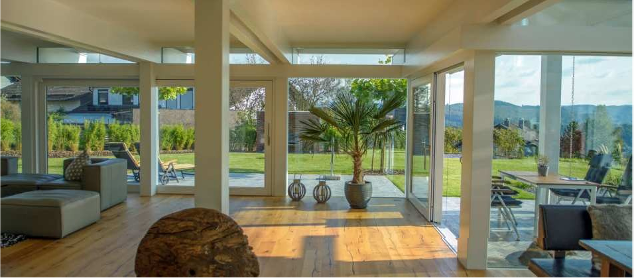
KD Haus UK’s post and beam timber frame construction allows open-plan flexibility that panel-based systems cannot achieve, with factory-controlled manufacture ensuring precision engineering for each bespoke home.
Common materials used include timber frames, structural insulated panels (SIPs), and steel frameworks.
Prefab systems are designed to meet UK construction regulations and many target higher energy performance standards. Building Regulations compliance is mandatory regardless of construction method.
Prefabrication is part of the UK’s commitment to MMC for improving housing quality and delivery speed.
What Defines a Traditional Build in the UK?
Traditional builds use on-site construction processes, primarily based on masonry, brick, or blockwork.
The construction process is linear, starting with foundations, followed by structural walls, roofing, and finishing.
KD Haus UK eliminates the multi-party interface risks inherent in traditional procurement by operating as a single entity from architecture through handover, unlike fragmented traditional build approaches.
Materials typically include brick, concrete blocks, insulation, and mortar, providing thermal mass benefits.
These homes are valued for their solid structural integrity, proven durability, and classic architectural appeal.
The process can be time-consuming and is often influenced by weather conditions, labour availability, and material sourcing.
Prefab vs Traditional Build UK – Key Comparison Factors
| Factor | Prefab Homes | Traditional Builds |
|---|---|---|
| Build Speed | Around 20–50% faster in many studies | Traditional timeline, weather dependent |
| Quality Control | Factory-controlled, consistent | Site-dependent workmanship |
| Weather Impact | Minimal delays | Significant weather dependency |
| Design Flexibility | Modular customisation within frameworks | Greater bespoke design freedom |
| Market Acceptance | Growing, especially high-end examples | Established market confidence |
Cost Comparison
- Prefab builds offer better cost predictability and reduced waste through standardisation.
- Traditional builds may incur higher on-site labour and time costs but can offer more flexibility in bespoke design.
Cost variations depend significantly on project scope, specification level, and site conditions. High-performance prefab systems, particularly architect-designed examples, commonly reach £3,000/m² or above due to enhanced specifications and energy performance targets.
KD Haus UK provides greater budget certainty with turnkey delivery at approximately £3,800 per m² compared to traditional procurement routes where cost overruns from trade coordination are common.
Speed of Construction
- Modular and off-site construction can reduce build times by around 20–50% compared to traditional methods, according to industry reports.
- Factory-built components minimise weather delays and allow parallel site preparation and assembly.
Factory prefabrication with KD Haus UK’s German manufacturing partner reduces on-site construction time significantly, with shell assembly typically completing in days rather than weeks.
Durability and Longevity
- Many UK brick and masonry homes have already lasted well over 100 years, with proper maintenance often extending lifespans significantly beyond original design assumptions.
- Well-designed modular and prefab homes can achieve comparable lifespans when built to NHBC standards and maintained appropriately.
Energy Efficiency and Sustainability
- Prefab homes can more easily achieve high levels of airtightness and continuous insulation, which can help meet upcoming standards such as the Future Homes Standard.
- Traditional builds can also achieve strong energy performance but require more careful coordination on-site to avoid thermal bridging.
Precision-engineered timber frame connections manufactured under factory QA conditions close the performance gap between design intent and as-built thermal performance that often affects site-built construction.
Design Flexibility
- Prefab systems allow for modular customisation within design frameworks.
- Traditional builds enable greater one-off design variation and material choices.
Every KD Haus UK home is bespoke to the plot and client brief, with Matthew personally assisting with interiors, fittings and specifications based on 35 years of architectural experience.
Maintenance and Repair
- Prefab materials such as SIPs or steel frames require minimal maintenance but may need specialist repair skills.
- Masonry and brickwork offer proven resilience and ease of small-scale repairs.
Resale Value and Market Perception
- Traditional homes benefit from established market confidence and familiarity.
- Modern prefab properties are gaining acceptance as their quality and sustainability credentials improve.
Prefab vs Masonry UK
- Prefab builds use manufactured panels or modules, while masonry relies on sequential, on-site brick and block construction.
- Off-site fabrication enables consistent quality control, while masonry quality depends on site workmanship.
- Prefab construction offers shorter build times and reduced weather dependency.
- Masonry builds, though slower, provide tactile durability and long-standing structural appeal.
- Both methods can achieve equivalent structural performance when built to BS EN and NHBC standards.
- Weather constraints, soil type, and local planning preferences influence whether masonry or prefab methods are suitable.
Matthew’s architect-led QA throughout KD Haus UK projects ensures standards are maintained at every stage, from design through specifications to completion, providing consistent quality control that site-dependent masonry construction cannot guarantee.
Prefab vs Brick House UK
- Brick houses retain traditional aesthetics and cultural heritage appeal.
- Prefab homes often showcase contemporary designs with clean lines and sustainable finishes.
- Brick construction entails higher labour costs and longer timeframes compared with prefabricated assembly.
- Prefab homes can integrate advanced insulation and airtightness more easily, reducing energy bills.
- Brick houses typically require routine mortar and surface maintenance; prefab exteriors may demand specialist replacement parts.
- Heritage and resale value remain stronger for brick homes, though high-end prefab properties are narrowing the gap.
Which Option Suits Your Needs Best?
- Prefab homes: Ideal for buyers seeking speed, cost control, and sustainability.
- Traditional builds: Preferred for heritage aesthetics, market familiarity, and timeless materials.
Factors to consider: Budget constraints, timeframes, planning conditions, and sustainability goals.
KD Haus UK can assist with the planning application process, integrating it into the overall project delivery from architecture through to handover as a single contract.
Buyer recommendations:
- First-time buyers – prefab for affordability and energy savings.
- Investors – prefab for fast returns and rental efficiency.
- Eco-conscious homeowners – prefab for low-carbon and sustainable performance.
- Heritage-focused homeowners – traditional for longevity and character.
FAQ
- Are prefabricated homes cheaper to build than traditional houses in the UK?
- How long does a prefab house last compared to a brick house?
- Is planning permission required for prefab homes in the UK?
- Can prefab homes match the energy efficiency of traditional builds?
- What affects the resale value of a prefab home in the UK?
- Are prefab homes suitable for all types of land and locations?
- How quickly can a prefab home be built in comparison to masonry construction?
- Do prefab homes have lower maintenance costs than brick houses?
